In which I spend three weeks fully immersed in Android land
In 2007 the iPhone and Android could not have been further apart. Reporting to you from 2025, the differences are fewer but they do still exist. The ubiquity of the iPhone and iOS devices in general—despite not technically being the market leader—is impossible to escape, and has influenced every corner of modern life. But ubiquity comes at a price; like Windows before it, iOS risks becoming boring and workmanlike while it allows Android the flexibility to experiment. Android also threatens with its bare metal inclusion of Gemini, a re-tooling of the old Google Assistant with AI tools baked in.
The setup
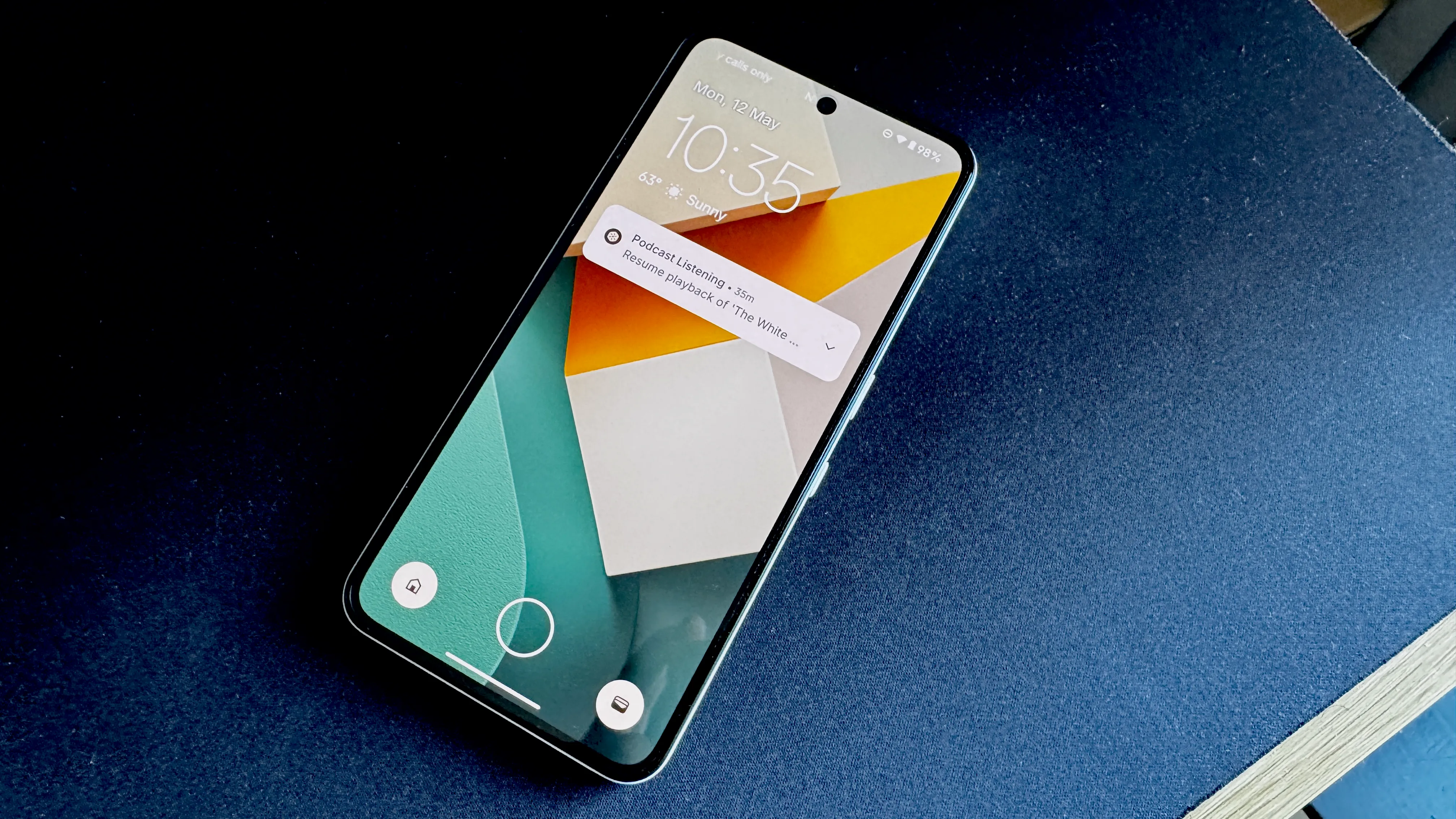
I bought a CMF Phone 2 Pro more or less the day it was announced. I fell head over heels with Nothing’s take on industrial design when the original Phone 1 came out, but wasn’t in a place where it made much sense. So as not to completely disrupt my life, I connected my Phone 2 Pro to Google Fi, which supports the rather unique constraints of the phone in terms of 5G.
For full immersion into the Android ecosystem I also bought a Google Pixel Watch 2, the lower end of Google’s smart watches running Wear OS 5. Refurbished on eBay these things can be had for less than a Doordashed dinner in NYC. It’s sort of shocking. I later replaced this with a Pixel Watch 3 45mm, for better performance and the larger screen (as I am old and my eyes are terrible.) This phone and watch combo have been augmenting my trusty iPhone 15 Pro and Apple Watch Ultra 2.
Making all of these things work together with Android is trivial. I seem to remember that not always being the case in the early days. But Google’s platforms, like Apple’s, benefit from a lot of verticality. A single Google login unlocks a lot, in much the same way that iCloud does in iOS. For the cost of a phone and a watch—which can be dramatically less on the Android side—you get a lot of features and benefits with not a lot of time investment for setup.
Build versus buy
The major differences really boil down to a handful of things, the importance of which seem small initially but compound over time.
The first is in device quality and experience standardization. These things vary wildly from device to device, just as they always have with Android. You can see this as a bug or a feature depending on your point of view. Google’s Pixel hardware is incredibly high quality, for example, rivaling Apple in every way. But obvious small corners are cut; my Pixel Watch 3, for $500, has difficulty adjusting its brightness for the current environment. Wear OS generally has some strange UX cues that take time to adjust to, and I think that would be the case even if I wasn’t coming from an Apple Watch. Sometimes apps launch to a black screen, or I’ll flip my wrist over to check the time and the screen never changes or responds to touches. Performance, even with the Tensor chip, can be sluggish.
Are any of these deal breakers on their own? Probably not, but over time they get annoying and ultimately disrupt the enjoyment of the device in question. My Apple Watch Ultra 2 has none of these issues. It chews through any task, never grows sluggish, and the screen switches modes so smoothly that you just never think about it. Granted, the Apple Watch Ultra costs almost twice as much. But there are Wear OS watches costing the same or more as the Ultra that presumably suffer the same issues because of Wear OS.
Wear OS 6 is due out this summer. It will be interesting to see what it improves in terms of UI and UX, other than the inclusion of Material 3 Expressive.
The other glaring difference is health tracking. Apple has spent heavily to build Apple Health and Apple Fitness into mainstream ubiquity. Apple Watches are good enough or better than they need to be for most people in terms of health tracking. The Ultra 2 adds even more specialized tools for ultra runners, surfers, divers, and other athletes who probably would have been Garmin users.
But the big deal here is that all of this is free for the price of entry into an iPhone or an Apple Watch. Fitness does have a paid tier that includes workouts and other “nice to haves”, but your experience will not be poorer for not subscribing.
Google, too, has a health “layer” in its ecosystem, however minimal. If you don’t want to use Fitbit (more on that in a minute), you can use Google Health. This is analogous to, oddly enough, Apple Health; both companies have a health “hub” app for collecting data, and a fitness app for workouts and activities. The acquisition of Fitbit is Google’s answer to Apple Fitness.
I really like Fitbit. Long before there was an Apple Watch my wife and I used and liked them. I happen to prefer the way it stores and presents data, and I do feel more connected to my health when I’m tracking real numbers and not “rings”, as in Apple Health. But with its acquisition, Fitbit’s payment model has changed and now includes a premium tier for tracking some data. It isn’t enough to just buy a device. (As a sidenote: Fitbit also doesn’t have a deep integration with the Apple Watch. This was the case even before they were acquired by Apple’s number one competitor).
The long and the short of it is that you pay for deeper health tracking on Android. You could argue that since the device cost is lower that added cost is not a big deal, and you might be right. Google also give six months of free tracking to anyone who buys a Fitbit device.
The bigger picture
If anything, the Android platform seems divided. On the one side, there is a genuine desire to build a reliable platform that works well and matches Apple in quality and attention to detail. But on the other side there is Google’s core business model, which is—to put it bluntly—gathering and selling data about its users. These things are often at odds.
Even with a device like the CMF Phone 2 Pro that eliminates bloatware and adware, you’ll likely encounter them elsewhere. Browsing the internet with Chrome exposes a shocking amount of ads, which Apple devices don’t have. Android has a vested interest in making it harder to block ads, as they’re its primary revenue source. A cynic could observe that blocking ads doesn’t harm Apple, so it’s acceptable only because it happens to align with their business.
Is Fitbit gathering, anonymizing, and selling data about me? It’s a safe bet that it is, given Google’s business model and track record.
But for many people these kinds of issues either aren’t a concern, or consumers feel somewhat fatalist about them—like they have little to no control over how their data will be used by corporations or the government, so it’s hardly worth worrying about.
—
Here’s what I know about Apple’s ecosystem as it stands.
Apple cares about privacy. Whether they care genuinely about their users, or see privacy as a sales point and differentiator is debatable, but data privacy is deeply baked into everything they do. Apple’s product quality is also practically beyond reproach. The culture of precision, exacting specification, and detail orientation from the Jobs era is alive and well, even if not much else is. Every product regardless of where it exists on the price sheet feels premium to hold and use. Apple rejects the parts its competitors consider first choice, to paraphrase the old ad copy, and it shows.
This translates to devices with impressive specs and exemplary usage stories. One of the major problems with the Android ecosystem is that you often get one or the other. The smoothness and fluidity of the iOS photography experience is virtually unmatched on Android. Switching between camera modules and zoom levels is butter smooth, as good or better than mirrorless cameras costing thousands of dollars. Some Android devices have technically better camera specs but can’t boast this level of deep integration and investment of time and user empathy. Similarly this CMF phone has one of the best usage stories on Android right now, but specs that sometimes see it falling short in terms of smooth day to day use. In other words, you can get a cheap Android phone or an excellent one but not both. There will always be tradeoffs related to the hardware, the customizations a manufacturer might make to Android, or something else.
So the pending question for Apple is: is it enough to have a smooth, ubiquitous user story and excellent hardware? It seems that some users will settle a bit in those areas to have access to things like AI, for example—a challenge Apple has so far struggled to meet.
Consumer technology is full of stories of brands that reached ubiquity and then just stopped. It would seem that reaching household name status can, in some cases, cause the well of ideas to run dry. This is precisely the claim that has been leveled at Apple for the better part of a decade now. This is the innovator’s dilemma: you need to be a household name, somehow remaining a familiar and reliable fixture, while also appearing as dynamic and reaching for what’s new and different. The irony, of course, is that the status quo creates sheltering shade where the new thing grows.
—
Android, for many years, was the budget option. It also seemed as though Google saw itself as a sort of loyal opposition to Apple, a thing that necessarily needed to exist in order to balance the universe against Apple’s rise to trillion dollar status.
There may now be something more to Google’s ambitions for Android. Apple’s substantial mindshare creates space where Google can riff, try new things, and establish a foothold with anyone who feels they’re not served by the Apple ecosystem. The Pixel line of phones has graduated from mimicry to stand on its own right, with its own custom-designed SOC and a pure, bloat-free distribution of Android.
There’s also hardware from Samsung, OnePlus, Nothing, Motorola and others that’s weird, daring, interesting, or just different. These phones all position themselves as projections of your rugged individuality. Many allow levels of deep customization that do ensure that no two phones need look the same, even if it does sacrifice some simplicity and ease of use. And finally it seems iPhone users, once that most unshakable of brand loyalists, are ready to see if there’s something more than black rectangles.
Exotic form factors and customizations might not be so attractive if iOS itself didn’t seem so stale. There’s little argument that Apple nailed the important parts of the smartphone when it counted. But the sad fact is that a win like that has a shelf life; what felt amazing in 2013 feels limiting now. Apple has fallen short of addressing a lot of what users had clamored for, to the extent that entire products seem hampered by iOS (or iPadOS) despite great specs.
It begs the question of just where Apple is spending its time? That might be a debate for another day.
What would I use if I had to start over today?
There are so many parallels between the rivalry between Android and iOS and that of Windows versus Mac back in the nineties. Going back and forth between these two platforms is not without its issues. Some things are easy, other things are fraught with lock in. If I like the Apple Watch but want to use a OnePlus phone I’m screwed, for example. Similarly if you love the photography experience of the iPhone but you want a Wear OS watch, I’m sorry. I understand the reasons why, but that doesn’t make them just.
I think the reality of the ecosystem question is that in 2025 these platforms have largely reached parity. Apple’s hardware is still very hard to beat, as is a lot of its attention to detail. But it’s getting close. The five year headstart Apple had on everyone with the first iPhone could be reaching an end.
Another factor, of course, is price. Sure Apple products are exemplary in form and function. But when an iPhone 16 Pro and an Apple Watch Ultra 2 will set you back almost two-thousand dollars without a carrier subsidy, they ought to.
The CMF Phone 2 Pro and a refurbished Pixel Watch 2 could meet the needs of lots of consumers without breaking the bank, and there are lots of other deals to be had with Android. (There are low cost iPhones, too, but it often means getting hardware that’s a generation or two back.)
Politics enter into this for me, as well. Apple has long resisted any hard political stance except for when really pushed. And when the chips were down, I felt that Apple was aligned with my values as a human. Google, on the other hand, would gladly unlock your phone for the cops or build a database of people with autism for the orange shitgibbon in the White House. But with Tim Cook knuckling under to the MAGA crowd on tariffs and contributing millions to Trump’s inauguration, it seems some of Apple’s stances may have only been convenience. And that sucks.