Are there any problems left to solve, at least ones that could be solved with software and computers? I ask this as an honest question, and as someone with a vested interest in said solutions. I think the answer is that the solution providers are all motivated by capital, so they all tend to cluster around the set of problems with the most “addressable market”. I want to believe this was not always the way, and I genuinely don’t think it was.
I thought about all this again as Apple rolled out its new “HomeView” speaker/kitchen computer/giant wall-mountable Apple watch. My read: this is another in a long line of relatively undifferentiated products with a dubious use case, wearing the same tired trade dress. We’re twenty-five years (maybe more) into Apple’s foray into aluminum and glass slabs, and there is no sign that it will end any time soon.
What would Dieter do?
Then, I had this exchange on Threads:
View on Threads
I think that constraints are a big part of what makes product design work. In Apple’s case I suspect that running their playbook into the ground might have more to do with desperately seeking constraint than with paying constant homage to Rams or Ive with everything they ship. Sitting down to design something in a place like Apple is probably, to put it mildly, daunting; it is probably also with an awareness that there are no constraints on what is possible. Apple controls billions of dollars, owns miles of manufacturing, and has many dozens of buildings full of talented brains to dream up anything. Nothing is in short supply. It’s the kind of thing that paralyzes a designer. This, I think, is why people conflate design and art. They both thrive on constraint, even if the outputs differ in big ways. I think many people sense that design, like making art, is about the ninety percent that is invisible.
Design systems and other rules of visual language are ways to maintain brand coherence, but also to impose limitations. All the worst products are borne from limitless places. But they also come from lack of any real problem to solve.
Solutions looking for problems
The problem that plagues a lot of modern technology is that it’s cart before the horse; I, as a designer, discover that I can make a computer do something interesting, and then make it into a product long before I know if it has any practical application. Legitimate products come from this, too. Every chemical company in the fifties and sixties was engaged in “pure research”, that is, limitless thought experimentation without any consideration for a market. It got us Tang, a moon landing, cars with fins, (then cars without fins) and more. A lot of what made that kind of top down product creation work was a monoculture—everyone watching the same three channels, listening to the same twenty pop songs, eating the same TV dinners, and driving one of four kinds of car. That tended to make everyone have the same types of problems—or made them more open to Madison Avenue’s suggested set of problems.
The internet breaks all that up, and we eventually arrive at a society where it’s entirely possible that two people who live right next to one another have never heard of each other’s favorite actor, food, car, or pop song. It gets harder to find capital P Problems™, and more likely that you find plain old problems. So now we’re here, in a place where the difficulty companies like Apple have is that the smartphone solved so many problems that it essentially obviated ten-dozen industries. No one needs a HomePod. They just don’t. So you go into work at Apple having to ask yourself if they would buy a HomePod with a screen attached to it instead.
The reasons to create a product at all get smaller and smaller. Everything is mostly good enough. The bar isn’t even considered. The streaming apps built into my TV are good enough. There’s no need for a $300 Apple streaming box outside of allegiance and lock in. Product design in 2026 exists almost solely the tyranny of small differences.
If you accept the problem set, that is.
Whenever I think of the problems everyone is clustered around, I can’t help but wonder what would happen if all these billions were pointed at cancer and AIDS. Is that naive? Probably. But I don’t care. Even in the barbaric and laughable old days some of our smart people were working on these, the very hardest of problems. I wonder if anyone is looking into them at all anymore, or if they’ve all read the writing on the wall and become “chief science officers” at bio-tech startups.
Dieter, redux
If you want to get right down into it and talk shop about product design, the thing that made Rams’ work…work is that it was never one thing. Most designers have one or two of his designs for Braun etched into their mental inspo board, and assume a connective tissue between them that isn’t there. This is not a designer who made the T 41 radio over and over and over.
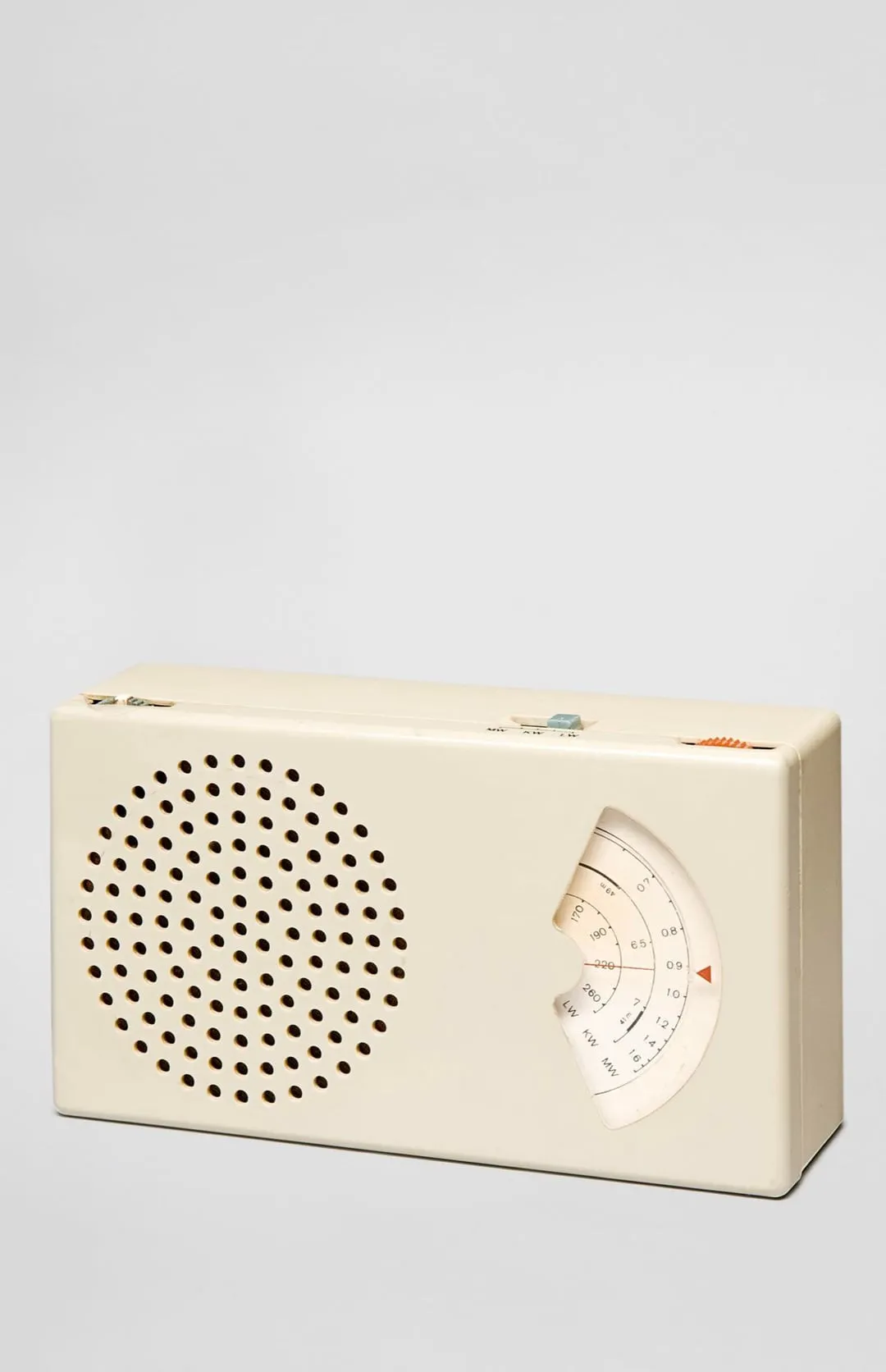
Dieter Rams work makes more sense the further back you stand. It’s not that each piece is connected to the next in some predictable way–by color, material, or finish; instead his work can almost be read backwards and forwards, like it all connects no matter how you approach it. Apple’s Jobs-return-era work connects in a similar way, maybe more so because it was less concerned with uniformity of color, material, and finish. Jony Ive learned (from Rams, no doubt) that the function of the product itself determines what it looks like, an outlook Jobs famously shared.
The austerity of the T 41 is not present in the KF 20 coffeemaker, for example. It is instead replaced by the loud colors preferred in the early ’70s. The form follows not only the function but the color, material, and finish. It goes where it’s required to go, and retains only the “connective tissue” to Rams other work (tubular chrome, symetrical vents) that the form allows.

The fruit company, and an ending
The sense that I have looking at Apple in 2026 is that, while not being entirely a zombie enterprise, it is largely on autopilot. A lot of its product output seems overly reliant on its own library of prior art, good though it may be. (It also seems to do so without any kind of joy, or even a wink of irreverence. Can you imagine Apple doing something like the Mini Cooper redesign, but for the iMac? I can’t. It would be too fun.) Having Tim Cook in charge saw to a lot of that as well, his excellence at and understanding of operations being his guiding principle over all else.
While excellent from a design standpoint, I don’t think anyone would ever say that Dieter Rams work was “soulful”; his work certainly expressed his own soul and the things he valued in design. But these were not particularly warm, joyful products. Apple, for a moment, made very soulful products. They appeared to have done something almost impossible by fusing Rams’ rigorous philosophy with its own merry pirate ethos.
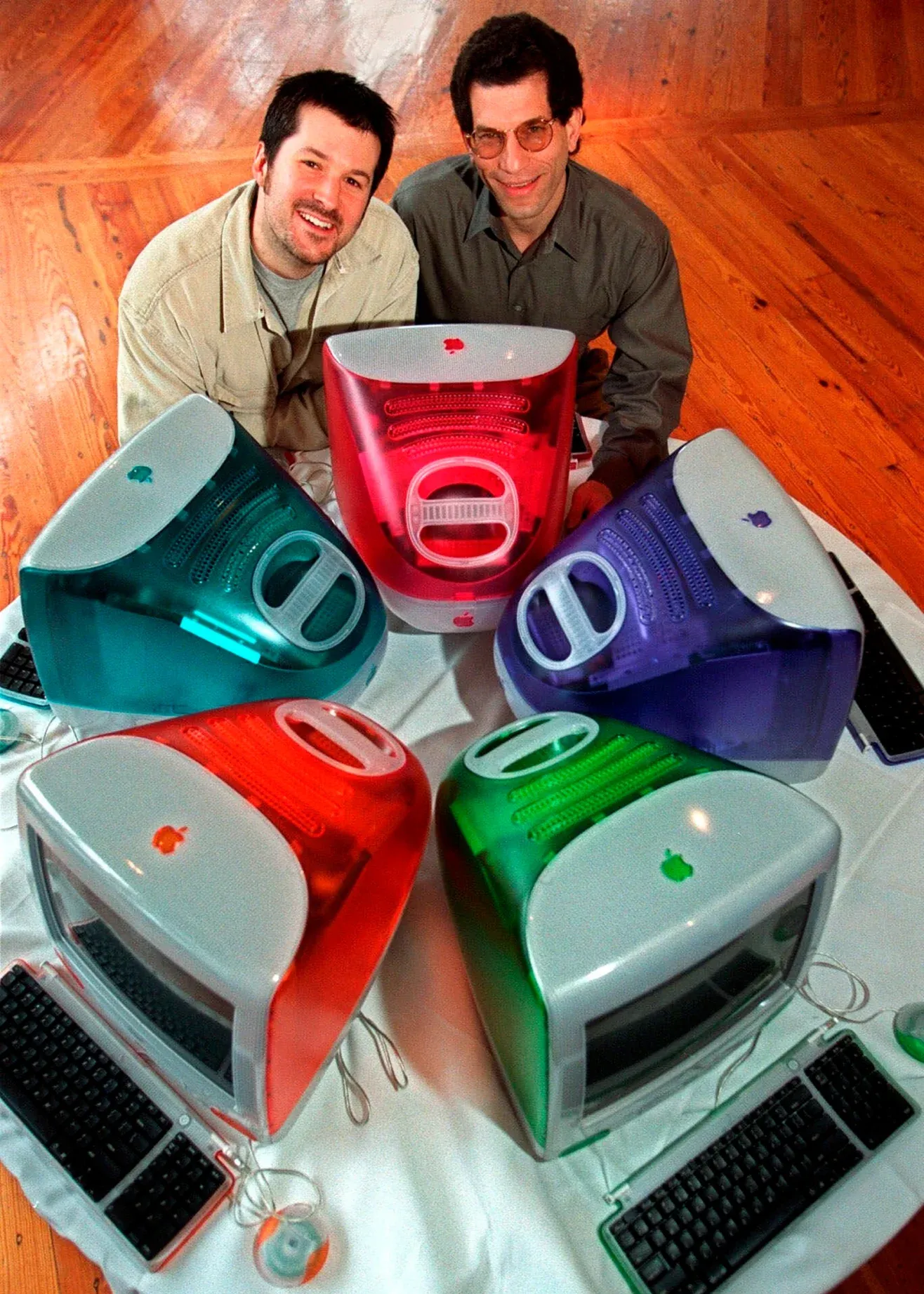
The sadness that I feel looking at something like the HomeView is less about who it’s for or what problem it solves—and I suspect the answers are no one and none—and more about how it seems to be about wearing a costume. It claims to come in “fun” colors, but they’re all basically white. Apple’s “Liquid Glass” UI purports to be about self expression and beauty, but it continues to feel like a bad decision that users are going to just have to live with for a decade or more.
These things all seem to represent an Apple, and an industry, operating largely without constraint; ginning up solutions in search of problems, claiming those problems are of dire consequence, and patting themselves on the back for solving them with such courage. At least if Dieter Rams work wasn’t soulful it could be said to be a solution to a real problem. A Braun electric razor, at the end of the day, solved your beard.